Sunday, December 12, 2010

Ancient History

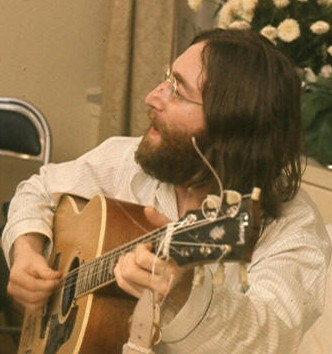
This past week I was struck how those under 30 years old reacted to the 30th Anniversary of the Assassination of John Lennon. Those of my generation clearly remember December 8, 1980 as if it were yesterday. But how does someone who wasn't born process an event like that? When one thinks of 30 years, the first thought is "boy that is a long time." But when you are looking through the lens of life experience thought that time, 30 years can be a long time or just yesterday. But through the lens of someone not even born then, 30 years takes on a completely different tone.

I didn't really watch much of the coverage. Mainly because I am recovering from major abdominal surgery, and I know the ending of the story. But I did watch an updated "Behind the Music" on VH1 Classics on the last years of Lennon's life. The episode starts after what has become known as the "Lost Weekend" where Lennon moved to Los Angeles in the early 70's with Yoko's assistant, May Pang whose job it was to be the "woman" to John, that Yoko couldn't while trying to deal with John's demons. During this year or so of time, John parties, and parties, and parties, and parties and parties some more. Along the way falling in love with May Pang (and May Pang in return), all with Yoko's blessing. At the end of the "Lost Weekend," Lennon realizes he needs to get his life together and that Yoko is the one he truly loves. May Pang is jilted and John goes back to Yoko, a changed man. May Pang remains bitter to this day. A year later Sean is born and this is where the story starts.

It goes through the years of John the househusband and then in 1980 taking the sailing trip to Bermuda where the sail boat is almost destroyed in a storm and from this comes the music for John's last two albums, "Double Fantasy" and the 1984 release, "Milk and Honey." After John publicly resurfaces in 1980 to restart his music career, with actual TV news video, right through the world wide reaction to the assassination. The updated portion is from 2006 where the addition of Strawberry Fields in New York's Central Park is stated as well as the Anthology songs "Free as a Bird" and "Real Love" are mentioned.

The thing that struck me was in the interviews with the people in Strawberry Fields. Most people were younger that 30 who had never known John when he was alive. All they knew of him was archival and his music. Many see him as omnipotent. A great thinker. A man before his time. Reverent, almost to the point of religious. My personal opinion is John would be quite appalled at that. John considered himself part of the working class proletariat. He was no better than anyone else, and didn't want to be. He was just a musician speaking his mind through his music. Nothing more, nothing less. Take it or leave it. He is on record saying that anyone who looked for deep inner meaning of his music beyond what was on the surface, was "Daft."

To many of the under 30 crowd, John Lennon is God like. Of course Yoko hasn't tried to dissuaded people of the thought. It helps keep John's memory and causes alive. Something she has stewarded for years oh so carefully creating and shaping and guarding John Lennon's legacy. The question is who will do that when Yoko Ono finally no longer is here to guide that legacy? Julian Lennon from John's first marriage with Cynthia Powell? Doubtful. He hardly knew his father. Sean? No one knows what his thoughts on the subject are. He has never publicly stated. I don't think he has ever publicly stated anything. So who knows?

I see John Lennon through the eyes of someone who remembers Beatlemania from news reports on TV. I remember when Sgt Peppers was release in 1967. I remember the breakup of the Beatles. I remember the Bed-In's for Peace. I remember when "Imagine" was released. I also remember vividly the events and my own feelings of December 8, 1980. John Lennon isn't God like to me. He is a man who died too young and the world was deprived of his creativity. He is a man who entertained me with his music. On occasion made me think about things differently. I don't think John would be disappointed if I just thought of him as a "musician." Who knows, he might have even song a song to me because of that thought.

Imagine THAT!

Saturday, October 9, 2010

Imagine - 70 Years

Today would have been the 70th birthday of the founder of the band, The Quarrymen. Who? The Quarrymen? Yes. The Quarrymen of the English port town of Liverpool who would become, The Beatles.

October 9th, 1940, Alfred and Julia Lennon welcomed John Winston Lennon into the world. Alfred, a merchant marine, who would soon depart Julia's and John's world, only to resurface years later after The Beatles made it and John rejecting him outright. Julia, herself a free spirit, soon left John with her sister Mary Smith, better known to the world now as "Auntie Mimi." "Uncle George" and Auntie Mimi raised John and did the best they could for the rebellious child. Julia did resurface in John's life from time to time buying him his first guitar and taught John cords on a banjo hoping John would get it out of his system saying "The guitar's all very well, John, but you'll never make a living out of it." On July 15, 1958 Julia was struck by a car and killed. John was only 17.

In March 1957 John formed The Quarrymen as a skiffle band, with jazz, blues, folk roots and country influences and then later shifting more towards rock and roll. It was during this time he met Paul McCartney and George Harrison.

As rock and roll became more prevalent, the band went through many names and members with the core remaining Lennon, McCartney and Harrison. By 1960, the band was now known as The Beatles, a play on words for the beat movement of rock and roll and from the "Mersey Beat Scene" the name used to describe the sound coming out of Liverpool and Merseyside England. The grueling Hamburg, German tours progressed over the next two years as the constant 8 to 10 hour stretches of playing in Hamburg's Reperbahn bars created The Beatles sound as the world would come to know. John, not one to sit on his laurels if it meant some mischief learned the "ways of the world" with his free spirit mother and father's genes on full display in Hamburg. But John's love of words blended in with his songwriting began in earnest with Paul in Hamburg as they honed their craft and played the standards of 1950's rock and roll along with standards of the 1930's and 1940's to the sailors and ladies of the night who, along with the beatniks of Hamburg, made up the Reperbahn club scene in the early 1960's.

If not for the now famous chance request of "My Bonnie" by "Tony Sheridan and The Beat Brothers" at the NEMS Store in Liverpool, and Brian Epstein going to The Cavern Club to hear The Beatles, John Lennon would more than likely have stayed in Liverpool working the blue collar job of the docks or on board ship and music history would have been much different. The general thought is John would have either been in jail or dead by 1970 had there been no Beatles as we know them today. John had been quite a teenage delinquent and was on a road to self destruction with only music saving him. Even in 1963 when George Martin first heard The Beatles, he had little faith this band of four, with Pete Best on drums and not Ringo Starr would amount to much more than a fad band. Thank goodness Sir George was willing to give them a try and Ringo agreed to join.

For those of us who remember December 8, 1980, the question will usually surface, "Where were you when John Lennon was shot?" Like the John F. Kennedy and Martin Luther King assassinations and most recently 9/11, those events are elevated above all else and are markers in people lives that get relived over and over again. For me Monday December 8, 1980, I was at college. A friend of mine had stayed over Sunday night in the dorms and we had partied pretty hard so we slept in that Monday morning. After class that afternoon, we resumed the party from the night before. By the time the news filtered out from ABC's Monday Night Football where it was first announced, we had been partying many hours. In an instant, our party turned into a wake as we found a TV and turned it on and watched the news updates. After midnight when the TV stations went off the air (GASP! Yep, stations didn't stay on 24/7 like they do now) we went to the radio and started tuning up and down the AM radio band. Every station you heard had either Beatles or John solo music. My suite mate Mike Ivey, made a cassette tape of that night, but I don't think it exists anymore, being erased a short time later because it was too painful to listen to. The wake continued until morning. Sometime during the night, we took a sheet and painted a sign of remembrance to John and flew it out the dorm window. The sheet still exists. I have it somewhere in my things. I saw it a few years back. A picture of the sheet flying out the window was in the year book.

In the early days of John's and Yoko's relation, she really came off as a nasty interloper. But since John's death, she has really been wonderfully giving to the world of John. A few years back she allowed much of John's artwork to tour and pieces to be sold. It came through here. I went. The cheapest pieces were around $1000. I didn't have the money then. I still don't, but I could probably get it now, when I couldn't then. If I ever get that chance again, I will. Not as an investment, even though it will have value and hopefully it will increase, but to own a piece of John. Sentimental. They were small cards with original pen or pencil drawings. I suspect they are all gone now, but if I ever get the chance again, I will take advantage of it.

So at 70 years old what would John Ono Lennon be like? The same he was at 40 upon his death. He would be doing music. Championing causes of world peace. And I suspect global warming as well. Maybe even a Beatles reunion. That was never out of the question. It just never had the time to mature. And still loving Yoko even more (was THAT EVEN POSSIBLE?) and watching Julian and Sean becoming their potential. No doubt he would be mellow but with a rebellious streak, but he would have the wisdom to use that rebellion for good as he was starting to do that the last 5 years of his life as house husband and primary caretaker of Sean while Yoko tamed the business world.

John is missed, not only by his family and friends, but by the people of the world, fans and non fans alike. The music that could have been created over the last 30 years is that never happened, is a crime. The fact that his music of the 20 years of his adult life and the causes are still championed by the proletariat speaks volumes of John's timelessness. The world is a better place for John's contributions and the world is a worse place for what was never done.

Saturday, September 18, 2010

The Picture Becomes Clearer

As I said in an earlier post, I didn't have much to say, even though lots had been going on. As Paul Harvey used to say, "And now, the rest of the story." Actually this picture is the culmination of my not having much to say. I will try to explain.

First the set up.

This is Melissa Painter, our weekend anchor I caught in a candid moment of contemplation sitting on our new High Def set waiting for our weekday anchor Neill McNeill to join her for our inaugural High Def newscast. Melissa is a very capable reporter and anchor in her own right. Melissa normally anchors the weekends by herself with sports guys Kevin Connolly and Danny Harnden and Meteorologist Charles Ewing. Management decided that with this newscast being the first newscast in High Def in the market and it being on a Sunday night, it needed to be co-anchored by two people. The media blitz leading up to this had been MASSIVE. We needed to be sure this newscast delivered on all kinds of fronts. I saw Melissa about an hour before the newscast walking down the hall. I said, "You're looking very pretty tonight." She responded with "I put some extra work into it!" as she smiled and winked at me. That is Melissa. She is a warm hearted, fun loving person who enjoys life and it shows in her work. She is a real joy to work with. We are lucky to have her.

Here is Neill McNeill on the left with his regular weekday partner, Julie Luck during rehearsals on the new HD set. Neill is a part of a generation of newsperson that takes his craft seriously. Neill started in the business around 1980. He, like me, grew up watching Walter Cronkite and watching the 1960's on TV, remembers the Moon landings and saw Watergate happen (where the "-gate" comes from in any kind of a political scandal now) before even going to college. Neill has a somewhat dry sense of humor, but is quite funny in his own right. You would never know it watching him on TV, but then, as a reporter, cred is the Holy Grail in this business. Do you want your news from a serious professional, or some laughing buffoon. Me? I want serious. And Neill delivers.

And just a quick word on his weekday co-anchor, Julie Luck since she is pictured here but was not on the first HD newscast. Julie is just a mess! Julie lives life to the fullest and she IS the life of the party on and off camera. Just a fun loving lady. And the viewers just love her too. I like being around her. She is so unpredictable. That is why we like her so much.

So there you have the ending. Being the first station in the market to bring HD news to the viewers. The beginning? Well, that is going to take a while.

Let's start this installment at the beginning of the day the top picture was taken, September 12, 2010. For months we had been installing new HD equipment along side the SD equipment. We had to stay on the air with the old SD equipment while installing all the new HD equipment and it's a logistical nightmare all its own. The equipment racks and control room were busting out of its seams with old and new equipment. We had to have it all installed together to do weeks upon weeks of rehearsals when we were not on the air with news. We had two of everything! You can see in this picture taken during rehearsals, the new HD equipment is toward the back of the picture where 6pm Director Amy Convery is sitting and a corner of the old SD switcher equipment and support equipment in the front of the picture. I am standing at the back wall taking the picture and can only get a small piece of the SD equipment in! TIGHT!

That Sunday we in the engineering department assembled at 8am to start to remove the old SD equipment and to relocate the HD equipment to its permanent location. We had to have everything ready by a 4pm 2 minute news break that airs during the halftime of the second NFL game. We were confident we could get 98% of everything done by then and the remaining 2% by air time (10pm). By 2pm, the only items left to do was remount the headset intercom system box at the new HD switcher and check the video wall monitor to be sure the video matched the locations. Most of the engineering team left while I stayed and finished up the intercom and tested the monitors. At 4pm the 2 minute news break was recorded to the HD server and about 45 minutes later, the first locally produced news program in the market aired. I stayed until the 10pm news was over to be sure everything worked. It did with just little nitpicky items we had either forgotten about or hadn't thought about. It was a big success.

We had most of management on hand for the first HD newscast and a full crew as if this were a full fledged weekday newscast. I saw one of the producers heading for the control room and asked did we have enough news for such a momentousness launch. They laughed and jokingly said, "Well...... we could use another hurricane to fill out the hour!" meaning we already had three hurricanes in the Atlantic, what was one more?

Well, all went according to plan for this madden voyage of our foray into HD news. I think the biggest problem was Neill had some issue with his new HD makeup that was fixed on Monday and life goes on.

More on our journey to get to this point in future posts.

Now here is a YouTube video from that first HD newscast.

Saturday, September 11, 2010

9-11-2001


Please take a moment today to remember those killed on 9/11 by purely evil people.

Including the six television transmitter engineers who were working on the 104th & 110th floor of the World Trade Center.

Robert Pattison - WCBS
Isaias Rivera - WCBS
William Steckman - WNBC - WA2ACW
Donald DiFranco - WABC
Steven Jacobson - WPIX - N2SJ
Gerard "Rod" Coppola - WNET - KA2KET

Saturday, June 26, 2010

What Time Is It?

For listeners of WWV and WWVH, that isn't a problem. Why you say? WWV and WWVH are US Government time stations. Time stations? What the heck is that?

Long before GPS, actually in the 1920's, electronics needed a time/frequency standard for accurate measurements. Time/frequency radio stations provided (and still do) that service. WWV was the first going on the air in 1920 from Washington, DC. Over the next few years WWV moved around the Washington area before settling in at Beltsville, MD from 1932 to 1966 when the station was relocated to Fort Collins, CO to better serve the lower 48 continental United States. WWV operates on five shortwave frequencies, 2.5 MHz, 5 MHz, 10 MHz, 15 MHz and 20 MHz. WWVH is located on the island of Kauai, HI with four shortwave frequencies of 2.5 MHz, 5 MHz, 10 MHz and 15 MHz and serves the Pacific Basin.

So what do you hear on WWV/WWVH? Well with a shortwave radio tuned to WWV/WWVH you hear, clock ticks, varies tones, top of the minute time announcements ("At the tone the time will be 15 hours 32 minutes Universal Coordinated Time - BEEEEP") and at certain minutes of the hour, oceanic weather conditions, solar wind conditions and shortwave propagation conditions are broadcast. And that is about it. But what you can't hear is just as important if not more.

Because WWV/WWVH uses atomic clocks to be sure they are EXACTLY on time, this also allows the transmitters to be EXACTLY on frequency. This also allows a subcarrier to be transmitted with digital information that can be read by computers for all kinds of test and measurement and standards signals and the user knows that it is as accurate as can be made.

If you remember seeing the "atomic clocks" of a few years ago, they worked on a very similar system. Instead of using shortwave of WWV or WVVH, they received a special time signal station co-located with WWV, time signal station WWVB. WWVB broadcasts on the Long Wave band below the AM band at 60 kHz. This allows the signal to be more stable and remain receivable longer with more reliability than the shortwave frequencies used by WWV/WWVH. Because the frequency is so low, WWVB doesn't use voice to broadcast information. It broadcasts computer data and these same atomic clocks that WWV/WWVH use are also used on WWVB's signal to keep corrected time and frequency.

In the late 90's NIST, the National Institute of Standards and Technology, the government agency that runs WWV/WWVH/WWVB, completely rebuilt WWVB and increased its power. WWVB had started at the Ft Collins site in 1963. The station was long overdue for a rebuild. This rebuilding is what spurred the atomic clock craze of the late 90's and early 2000's. You can't as easily find atomic clocks as you once could because of GPS, but they are still out there and there are many reasons where the NIST stations are preferred over GPS, even though GPS provides everything the NIST stations provide. WWVB reception isn't affected by the Sun as WWV/WWVH and GPS is. The 60 kHz receivers are much cheaper than GPS receivers. The data is easier to manipulate and you don't need a clear view of the sky to make it work as with GPS.

When I first went to work at the station in 1992, we had a 1980's model WWV Master Clock receive system at the studio that kept us on time for network and other programming. In the late 90's we upgraded to an early GPS Master Clock system and replaced the aging and ailing WWV Master Clock system. When we installed the new automation system a couple of years ago we had to install a better GPS Master Clock system that offered more features that the automation required. I grabbed the original GPS Master Clock system and moved it to the main transmitter building and it is really nice to have it and what it does. But at the backup transmitter building, it doesn't make sense to spend that kind of money just to tell time, which is all I need there. So two $39 Radio Shack atomic clocks work just fine. Time correction provided by WWVB, Fort Collins, Colorado of course!

Back in the tube days, test equipment at stations were not as stable as they are now and required a known frequency standard to keep the equipment and transmitters within tolerance. Cheapest way to do it? In the rack was a WWV receiver with a test port on it for the standards measurement. We had a WWV receiver at the transmitter for that very purpose. When we rebuilt the transmitter site in 1994, the receiver was finally retired. That old receiver is now in my collection. It still works!

Technically the NIST stations are utility stations because they serve a utilitarian purpose, but they are also fun to listen to. Depending on how the band conditions are, it isn't too unusual to hear WWVH under WWV at times. Since both stations are exactly on the same frequency, there is no interference and you will hear the female WWVH voice announce the time at :45 seconds followed by the WWV male voice announcing the time at :53 seconds as if from a single station. That is how you tell which station you are hearing. WWV/WWVH identify themselves at :00 minutes and :30 minutes.

Other countries have time/standards stations as well. In the US, the easiest one to hear is CHU, Ottawa, Ontario, Canada. CHU broadcasts on 3 frequencies, 3.33 MHz, 7850 MHz and 14.67 MHz. CHU alternates time announcements every minute with French on the odd minute and English on the even minute with station ID every minute. "CHU, Canada. 15 hours 32 minutes UTC."

For more info on WWV/WWVH/WWVB including pictures go to http://www.nist.gov/physlab/div847/grp40/wwv.cfm. For CHU check out http://www.nrc-cnrc.gc.ca/eng/services/inms/time-services/short-wave.html

Saturday, June 12, 2010

Digital Transition - One Year Later

June 12th, 2010 makes the first anniversary of the termination of full power analog broadcasting in the United States. So how has the broadcasting world changed in that first year? Actually not that much. Over the air digital television has certainly gone through some teething pains and continues to do so. Some people on the fringe of analog stations can no longer receive those same stations as digital stations. Some stations have had to change digital channels after the transition to improve reception to it viewers. Some stations have had to add low power translator stations to cover the same area they did as analog stations. Over the air viewers are relearning the lessons about antenna reception with digital as their parents and grandparents did in the 50's and 60's before cable and satellite. While we still field reception questions, it really isn't more than what it was in the analog days, believe it or not.

Certainly the transition to digital over the air television was not 100% painless as some in the government and trade organizations made it out to be. Some viewers have lost stations they grew up with because those stations are no longer on VHF channels and UHF doesn't quite carry as far way out on the fringe while other viewers are now receiving stations they never received before. Of course if you are one of the viewers who lost stations, this whole digital TV thing sucks. If you were one of the viewers who picked up new stations, this digital TV thing is pretty cool. It is all in your perspective.

What we are finding is that viewers with decent outside antennas pick up all the local stations with no problems. Those with inside antennas have problems. Truth is, those viewers always had problems in the analog days but because they could see something, even a noisy static filled signal, they put up with the aggravation of a bad signal. In the digital world, if the signal isn't a certain signal level, a "NO SIGNAL" will be seen on the screen so those viewers see nothing. We have proven time and time again that a UHF screen antenna mounted in a bucket on an apartment porch or balcony will receive more stations and better signals than an indoor antenna. Yet, when you tell people that, they think you are lying to them to just get them off the telephone. We WANT YOU as viewer. Why would we lie about something like that?

I must admit, I always have to suppress a laugh when I get a viewer who tells me, that the problem they are experiencing is with our station only. And just about EVERY caller tells me that. Listen folks, you aren't the first ones to tell me that and that will NOT make me move any faster. Been there. Done that. Got the tee shirt. 99% of the time, after asking several questions, it turns out that we are NOT the only station they are having a problem with. Most of the time, the viewer doesn't realize they have problems on other channels. One such example was a call I got from a little old lady about 15 years ago. She called up complaining she could get all the other channels except us and she wanted us to "fix our problem." After questioning her about her problem, I asked her how old was her TV. She immediately snapped back, "I can guarantee you it isn't MY TV. It is only 20 years old!" Twenty years old? Right. Not your TV. Well it turned out it WAS her TV. The mechanical tuner in this late 1970's model TV (this was before the electronic tuners we have today) had just worn out after 20 years of use. It happens. It is mechanical. She finally admitted after a few more questions she had to rock the channel knob back and forth on ALL stations to get them to come in. Classic mechanical tuner issue. But remember, she only had this problem with OUR station.

I got a call a few months back from a lady who lives about 5 miles from the transmitter complaining she could get all the other stations but couldn't get us and we needed to "fix our problem." (See the pattern?) After asking the usual questions, it sounded like the signal wasn't getting from the antenna to the TV. But no, it was only our station. I recommended some things to do and a few days later, she called me back to say that her son had gone on the roof and found where the coax had become disconnected from the antenna and she now had a perfect signal and thanked me for the information. (I like THOSE calls!)

I can honestly say that 99% of the callers are truly nice people who really want to watch our station and are looking for answers (sometimes miracles) from us. They are just very adamant about it at times. But that last one percent can be so vile and so hateful, we just hang up on them. That is verbal abuse and we are not required to deal with those callers and we don't.

Most of the issues these days deal with antennas and their placement. Lots of bad information out there about antennas and how to install them. A big one we are seeing are people installing two antennas, one pointed to Sauratown Mountain for WXII and WUNL and the other pointed toward north of Randleman where the other stations are located and using a splitter in reverse to combine the two into one to avoid having to use a rotor. On paper, this looks like a great idea. In reality, you have to know you are doing to make this work. The problem is you can introduce multipath (ghosting) in the system. With one antenna pointed in one direction and the other antenna pointed in another direction, the signals of the stations arrive at slightly different times to your receiver causing ghosting since one of the signals has to travel a longer distance by bouncing off of something like a water tank or building and then being received by the other antenna. Your receiver sees the two (or more) signals and is not sure which one to lock and so you don't get any picture at all or it breaks up at best. You have to use special antenna combiners and the length of cable between the antennas and the combiner is critical as well to not have this internal ghosting. You may also need specific channel filters to reduce ghosting or overloading of the receiver. It can get very complicated and you will need expensive test equipment to trouble shoot problems as well to make it work. You are basically creating a small cable headend and they are not simple or cheap things.

I must admit, I have gotten smarter myself as people call and I have to try and troubleshoot their problems over the phone so it has been a win-win as far as I can tell. As time goes by, things will get better. The same thing happened with analog TV. It got better over time. Digital will also. In just 12 months, things have gotten much better and the ratings show it. So hang in there. We are.

Monday, May 31, 2010

KJL-88

Time moves on. It is only one of two constants in the world. The other being death. And that is certainly true in broadcasting. After the Digital Transition, it has amazed me at how fast the industry as a whole is moving away from analog. In less than a year, you walk into most any TV station in the country and you may not recognize it from this time last year. Widescreen news is just one of those things. Two years ago widescreen newscasts weren't on ANYONE's radar. Now, stations that don't have widescreen newscasts are going the way of the dinosaur faster than the Chicxulub meteor that wiped them out.

The past two weeks we have been upgrading our intercity microwave systems from analog to digital. It hit me that some of this equipment is the oldest in the whole station. Some of it was manufactured while I was still in junior high school! (As the kid on the add says, "That's oood!") The first question that hits me is why hasn't this stuff been changed out sooner! These are the links that bring back the video from the news scenes out in the community. The simple answer, Why? It works. It is bullet proof. It never fails. It is out of sight. It is out of mind. And there are literally TENS OF THOUSANDS of these transmitters and receivers slaving away all over the country. And have been for decades!

Starting in 2008, due to a rule change by the FCC, and the money of Sprint/NEXTEL who wanted to carve out a piece of the broadcast mobile microwave band for commercial use, all broadcast mobile microwave transmitters and receivers nationwide had to be changed out. In order to fit the new band, it had to be digital. The Piedmont Triad was one of the first areas to convert. So from the trucks to the microwave receive sites it has been digital since 2008. But from the receive sites back to the studio, it has remained analog. And the pictures provided it. Hence, the change out.

But one link holds a special place in my heart. And that is KJL-88. If you saw the changeover from analog to digital last June, after the Star Spangled Banner played, you saw a "slide" of an old WGHP ID logo sign off. On it, in the lower third, KJL-88. It is on YouTube. Check it out!

You may be asking, "What is a KJL-88?" KJL-88 is the call sign assigned by the FCC for a specific fixed microwave link. It just happens to be the first microwave link assigned to WGHP back when it came on the air in 1963. (We now have over 10 fix point microwave links running all over the Triad to bring back live pictures of news events.) If you ever watched WGHP from October 14, 1963 to March 31, 2006, you were watching KJL-88! It was the main, and at the time only, studio to transmitter link. That is how the programming got from first the Old Sheraton Hotel studios and then later the current Francis St studios. After the new transmitter site went on the air in March 2006, KJL-88 was reclassified as the backup microwave link since the original tower (which we now call the "Plainfield Transmitter Site") became the stand by tower site. (SIDEBAR, WGHP is the only TV station in the Triad that has two completely separate and independent transmitting sites so if thereWGHP Auxiliary Transmitter Site - 1999 is a major problem at one site, the other site can come up and we can continue to broadcast.) For the next 3 years, KJL-88 continued to operate as it had for the preceding 43 years, just no one was watching since the backup transmitter was not turned on except for testing into the dummy antenna. After the June 12th 2009 transition to digital television, it looked like KJL-88 may have broadcast it last. The analog equipment was not compatible with digital broadcasts and the equipment itself was over 30 years old. We had placed a digital receiver that was on the main microwave link to the new tower site (which is call the Courthouse Site) at the Plainfield Site to keep the channel 8 digital backup transmitter serviced, but that wasn't a permanent solution. You see the Plainfield Site is also the location of one of our microwave receive sites so we have to be able to send video from the trucks back to High Point from there. When the return link was put in back in the late 70's, early 80's, it too was analog. In order to continue to keep communications with that receive equipment, we had used some of KJL-88 to send the controlling signals over it. How to do it now? The microwave link back TO High Point (WLD-423) was staying. What about the link FROM High Point (KJL-88)?

The old analog equipment for KJL-88 was removed last year and it was traded in for other microwave equipment we needed on other microwave links. So for the first time since 1963, that link was open. We maintained the license (good ole' KJL-88) but what to do with it now? It is interesting to note that the equipment removed from KJL-88 last year was not the original equipment. Even though the equipment removed was installed in 1976, it replaced the original KJL-88 equipment (version 1.0) from when WGHP went on the air in 1963. That equipment was a RCA tube type microwave system. It had no backups that I have ever heard of. One story of interest was the receiver. There was one tube that would go out on a fairly regular basis. Since the transmitter site was manned in those days when the transmitter was on the air, if the tube went bad, there was a case of tubes sitting close by. As the signal started to fade into snow, which viewers at home could see just as easily as the engineers could, the duty engineer would pull the offending tube out and plug a new one in. But these tubes were famous for not always working straight out of the box. I am told it was not uncommon to try 5 or 6 tubes before one was found to work. Of course while all this was going on, there was no picture on the air. Just black or a trouble slide on air generated at the transmitter site. Remember, it would take 30 to 60 seconds per tube to see if it would work so this process could last 5 minutes or more! The station suffered through this until KJL-88 version 2.0 was installed in 1976, with the solid state equipment I pulled out of service last year.

Earlier this year it was decided that there would indeed be a KJL-88 version 3.0 and it would be digital. It would feed the new channel 35 backup transmitter at the Plainfield Site and continue to provide control signals for the receive site. And since we were upgrading this link, what about the return path back to the studio (WLD-423)? It was decided to make that link digital as well. And I guess while we were on the subject of microwave paths, what about the others. Obviously, the main microwave link to Courthouse Site was already digital so we didn't have to worry about that one. Pleadings and beggings were performed. Arms were twisted. Compromising pictures taken. Deals cut. Money extorted. In the end, it was decided that while we had the attention of the microwave companies (who were begging us to buy and willing to give first borns if we did) let's upgrade the other paths as well and clean up our microwave shots that would then be digital from the field all the way to the viewers TVs. Equipment was ordered and after waiting what seemed an eternity, it began arriving several weeks ago. First link to be installed? KJL-88 and its return link sister WLD-423. Since then, we have installed the link from Greensboro back to High Point and next on the list, the link from Winston-Salem to High Point and the link from our news bureau at the Winston-Salem Journal. As sweet as it is to have those links converted to digital and the improved pictures from the field that viewers can see now, to be able to fire back up KJL-88 after almost a full year of being dark, was a great feeling. A connection to those engineers of yesteryear who first put KJL-88 on the air in 1963. The link I remember watching as a kid. A year ago, I didn't know if KJL-88 would ever live again. Today, it will live for the next 30 years at least.

So if you are awake around 3 or 4 AM, that is when we run the ID graphics of the microwave links and you will see KJL-88 on it. And that's the story of KJL-88.

Saturday, April 10, 2010

"So long! Farewell! See you NEXT time! NOT."


On Friday the 5pm newscast producer put together her last show. She is moving up to a larger market and WAAAY up the east coast. Several of us were taking a coffee break in the Green Room across from the control room about 3pm and she came by getting things ready for her last show. We called her in and told her how we would miss her and don't forget the little people and oh yeah, come around occasionally. She said she would and I don't think ANYONE believed she would be coming back. She might THINK she will, but it will NEVER happen.

It isn't that she doesn't WANT to. It is just life doesn't move like that. She isn't from around here. She has no family here. She came to college here and that is what brought her here in the first place and this was her first job out of school. No real reason to come back except to see former co-workers who may or may not even be working here then. I mean, it isn't like we are FRIENDS or anything. Why would she or why should she want to come back? Nothing personal. Honest. Circle of life, Simba.

I speak from a certain first hand knowledge of such situations. I have seen it a thousand times in my career. I have even been in that very position myself a couple of times before believing life would go on as before with worker-friends, just that I would be a little farther down the road, that is all. But the truth is I was moving on to a new job in a new town and any ties I had were being cut in two with all the precision a surgeons scalpel. I just wouldn't acknowledge it.

The first time it happen to me it was in the town I grew up in. But by the time I moved on, family had moved away and all my growing up friends had moved on and it was only co-workers I associated with. A couple of them I even considered good friends, but in the post move era, I have only talked to one of them twice on the phone and have never seen the other one in over 20 years. I do feel bad about that, but the 2 times I have been back that way, I was passing through going somewhere else with no time to spare it seemed and my hometown was on the route. In all honesty, the one who I haven't seen since I left, I did go by his "house" to see him one time, but found out he had moved somewhere else in town, but I didn't know where and didn't have the time to find out where. People just don't stay at a job like they used to. Normally.

My station is unique in that many people stay for 10's of years. That isn't the case anywhere else anymore. My immediate supervisor has been there for 30 years and my department head for 31 years. The General Manager has 34 years of tenure there! Some are on their second time around! Some have never worked anywhere else in their lives! Me? I am a newbie. A rookie. Only 18 years of service to the station. People cross town? If they make it 5 years, they consider themselves lucky.

Now adays those being hired don't plan on staying. This is a stepping stone to bigger and better things so I really expect we who have the tenure of decades are the last of a dying breed. To be honest, I never expected to still be working at the same place after 18 years and counting either. Bright lights are always over the horizon.

Have I had other offers? Yep! You bet! More money too! But not only what you make, but the environment you make it in is just as important to me and so far I haven't found anything better, yet.

So Jen, enjoy Connecticut and be as successful as you want to be! Nice knowing you and working with you! But we shall never see each other again. Blame the Gods of life.

Saturday, April 3, 2010

Time Flies

Holy cow Batman! Where did the time go?

May 23, 2009 was my last blog. And it was a rant at that. Surprisingly no hate mail from it either. So either no one cared, no one read it or no one reads me. That is Ok. No hard feelings. Honest. I have had nothing really to say. Well, I have, but I have had no blogging energy to do it. Have pretty much ignored facebook and Twitter too over the last year. Trying to get better.

Writing takes a lot out of me. Don't know why. It just does. The run up to the actual act I have LOTS to say. Sit down to do it and BAM! Nothing. Or it comes out WAY too long that even I don't want to read. I don't know how professional writers do it. I don't mean the people who write books (God I would kill myself if I knew I had to write a 200 page book. I don't think I have 200 pages in me for an entire life). No I mean the people who write everyday for a living like news reporters, PR people, Editorialists, etc. I slave hours over what piddle I write here. With this posting I am trying to do it all in one take with one proofread, not the over and over and over proofing and touching up I usually do. It seems when I do that, that is when my "few lines" grow into a novel.

I hate when others do that and I REALLY hate it, when I do it so I guess that is the real reason why I have been tardy in this endeavor, even though my life has been pretty full the last 12 months and will continue to be for the foreseeable future. Lots to write about, just need to be more brief and concise about it.

I am starting to fall into the old funk. OK, I'll stop now.